 Go to content


Play Expertise
THE THEMING QUESTION
Adventurous playground design often faces pressure to incorporate themes - pirate ships, castles, space stations or jungle motifs. Whilst thematic elements hold intuitive appeal, particularly for clients seeking immediately recognisable concepts, growing evidence suggests that heavily themed playgrounds may actually limit play value and longevity.
This page examines the relationship between theming and play quality, presenting the case for unthemed or minimally themed design approaches that prioritise materials, form and function over prescribed narratives.
This isn't an absolute position against all theming - there are instances where well-executed themed elements can support rather than constrain play - but rather advocacy for restraint and careful consideration of how theming serves children's play needs rather than adult preferences.
THE LIMITATIONS OF HEAVILY THEMED PLAYGROUNDS
Prescribed Play Narratives
Strongly themed playgrounds communicate clear messages about intended use. A ship structure suggests nautical adventures, treasure hunts and sea battles. A castle implies knights, princesses and medieval scenarios. These themes appear to stimulate imagination, but research into children's play patterns reveals a more complex picture.
Studies of children's play preferences indicate that overly specific themes can constrain rather than liberate imaginative play. When equipment dictates a particular narrative, children who don't connect with that theme feel excluded. A child interested in dinosaurs or space exploration may struggle to engage with pirate-themed equipment. More problematically, the strong thematic identity limits how the structure can be reimagined - it remains stubbornly a pirate ship rather than transforming into whatever children's current games require.
Dr Helen Dodd's research at the University of Exeter examining children's playground preferences found that children valued flexibility and adaptability in play spaces. Equipment that could become "anything we want" scored higher in sustained play value than equipment with fixed identities. Playgrounds described by children as "boring" often featured strongly themed elements that had exhausted their novelty once the obvious play scenarios were explored.
Aesthetic Longevity and Maintenance
Themed playgrounds present practical challenges beyond play value concerns. Bright colours and representational details require maintenance as weather takes its toll. A castle turret with crisp paint detailing looks impressive initially but appears shabby once paint weathers and fades. Replacement and repainting represent ongoing costs and maintenance burdens.
Heavily themed designs also risk rapid dated appearance as aesthetic preferences evolve. Themes that seem current and appealing during design phases can appear tired within several years. Natural materials, by contrast, develop attractive patinas as they weather, with greyed timber and weathered rope acquiring character rather than looking neglected.
THE CASE FOR UNTHEMED ADVENTUROUS PLAYGROUNDS
Open-Ended Imaginative Possibilities
Unthemed playgrounds using natural materials and abstract forms provide frameworks that children populate with their own meanings. A timber platform accessed by rope net climbing might serve as a ship's crow's nest one day, a mountain summit the next, and a fortress the following week. The structure remains constant, but its identity flexes to accommodate whatever games children devise.
This flexibility supports sustained engagement across years rather than months. As children develop, their play interests evolve, but well-designed unthemed structures continue providing appropriate challenge and possibilities. The timber tower that served 6-year-olds playing families becomes a strategic strongpoint for 10-year-olds' territory games.
Research from Play England's extensive study of playground usage patterns demonstrated that playgrounds with abstract or minimally themed natural structures showed higher repeat visitation rates and longer average play sessions than heavily themed equivalents. Children returned repeatedly because the space remained interesting - it didn't exhaust its play potential once the obvious theme-based activities had been explored.
Focus on Physical Challenge and Capability
Removing thematic constraints allows design to focus on what matters most for adventure play - physical challenge, spatial complexity and movement variety. Rather than ensuring a structure "looks like" a castle or ship, designers concentrate on creating compelling climbing routes, interesting level changes and engaging movement challenges.
This shift in priorities typically produces better play outcomes. A cargo net climbing surface succeeds because it requires coordination, strength and courage to navigate, not because it references nautical rigging. A rope bridge engages children through its balance challenge and slight bounce, regardless of whether it connects castle towers or abstract platforms.
Adventure play spaces which emphasise physical challenge over thematic identity serve broader age ranges more successfully. Older children who might dismiss pirate-themed equipment as "for little kids" engage willingly with challenging timber and rope structures that test their developing capabilities.
Material Authenticity and Sensory Richness
Natural materials provide intrinsic interest that doesn't depend on applied themes. Timber grain, texture and smell engage sensory attention. Rope's flexibility and texture contrast with timber's solidity. These material qualities create rich experiences without requiring decoration or representational detailing.
The authenticity of substantial timber construction also communicates quality and permanence in ways that brightly painted metal or plastic equipment cannot match. Heavy-section robinia posts and beams suggest strength and stability. Children respond to these material qualities at visceral levels, trusting structures that feel solid and well-made.
Landscape Integration
Unthemed designs integrate more successfully with natural settings. A timber structure nestled in woodland appears continuous with its environment, using materials that belong in that context. Themed equipment, particularly with bright colours or representational detailing, often clashes with natural surroundings.
This integration extends beyond aesthetics to experiential qualities. In woodland settings, natural timber structures allow children to maintain connection with the forest environment rather than entering a separate themed world. The playground enhances rather than replaces the landscape, creating hybrid spaces where built and natural elements coexist.
See our natural playground projects
CREATING DESTINATION PLAY SPACES
For developers and councils seeking to create landmark play facilities, adventurous playgrounds offer significant advantages. Their visual impact and play value justify investment, creating attractions that draw visitors and enhance surrounding developments.
Bespoke design allows integration with landscape themes, local heritage or environmental contexts. A woodland-edge site might feature extensive timber structures blending with existing trees. Coastal locations could emphasise rope work and nautical references through material choices and structure forms. Urban parks might contrast natural timber against hard landscaping, creating striking visual statements.
Case Study Examples
Hogmoor Inclosure combines adventure play structures with natural woodland setting, creating an immersive forest play experience. The design respects the sensitive heathland environment whilst providing substantial play value through carefully positioned timber installations. The unthemed approach allows the natural materials and forest context to define the character rather than imposed narratives.
RSPB Old Moor integrates play into a wetland reserve, using playground elements to enhance environmental engagement. Water features and natural materials reinforce the reserve's conservation message whilst providing physical challenge. The playground's identity emerges from its landscape context rather than applied themes.
Chester Zoo's play areas demonstrate how adventure playground principles apply in commercial leisure settings, creating visitor attractions that align with the institution's educational mission whilst meeting high throughput demands. The focus on physical challenge and natural materials creates compelling play destinations without relying on literal animal themes.
Williams Den in Sheffield shows how unthemed design serves urban contexts, creating a bold timber installation that functions as park landmark without prescriptive thematic identity. The structure's architectural quality and spatial complexity provide all the identity and appeal needed.
View more destination play space case studies
MINIMAL THEMING APPROACHES
Whilst making the case against heavy theming, we acknowledge that some thematic references can enhance without constraining. The distinction lies in whether themes dominate design or provide subtle enhancement.
When Theming Works: The Princess Diana Memorial Playground
The Princess Diana Memorial Playground in Kensington Gardens demonstrates how theming can succeed when executed with sufficient play value and varied opportunities. The playground's centrepiece - a large wooden galleon ship - provides a clear thematic reference that appeals to adults and children alike.
However, the success of this themed element lies not in its literal representation but in its play functionality. The galleon structure incorporates multiple levels, varied access routes, climbing challenges and spaces that accommodate diverse play scenarios. Children engage with it as a ship when that suits their games, but the structure's complexity and spatial richness allow it to become whatever children's imagination requires - a fortress, a house, a mountain base or simply an exciting climbing challenge.
This illustrates a crucial principle: theming works when it serves play value rather than constraining it. The Diana playground's themed elements succeed because they're designed well first as play structures, with theming as an overlay rather than the driving force. The play value exists independently of the theme.
Timberplay's approach recognises why theming appeals - it provides neat, clear messaging that clients and funders readily understand. We've contributed to themed playspaces where appropriate. But we advocate that theming should never compromise play functionality, and we prefer open-ended elements that don't require thematic justification.
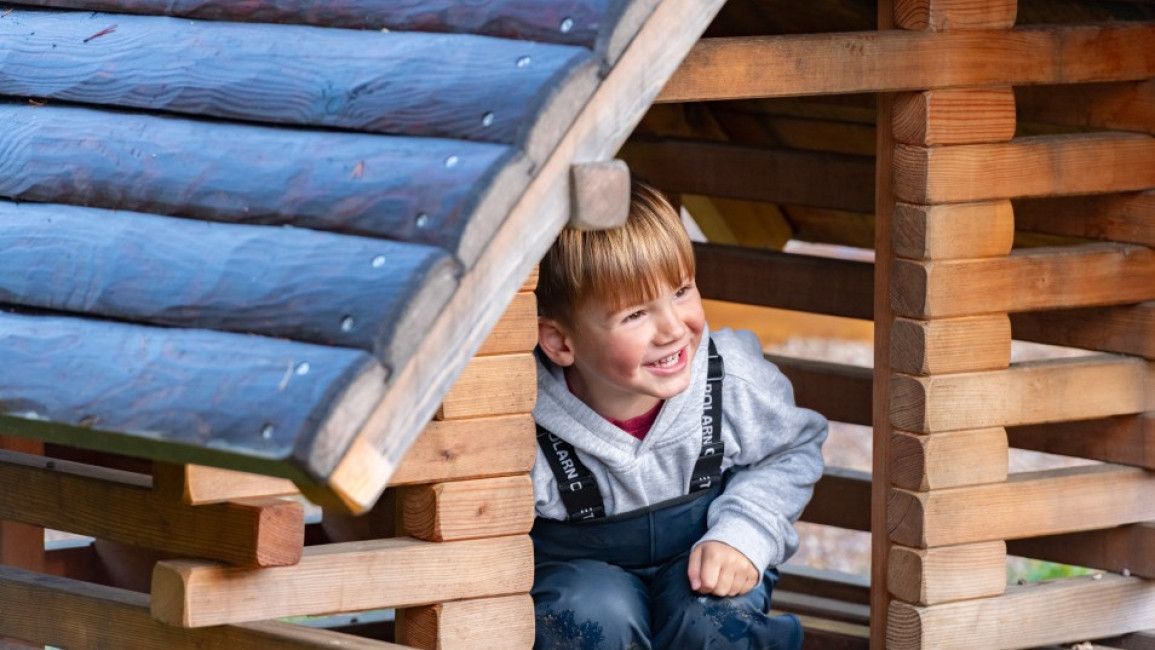
Consider play houses as an example of this philosophy. Simple, well-designed play house structures can become shops, houses, dens, schools, hospitals or whatever children imagine. Their strength lies in their simplicity - they provide enough structure to suggest possibilities without prescribing specific scenarios. This open-ended approach typically delivers better long-term play value than more prescriptive themed equivalents.
The key question isn't "should we theme?" but rather "does this theming enhance play value, or does it primarily serve adult preferences for clear visual concepts?"
When theming genuinely adds to play possibilities rather than defining them, it can succeed. When it simply provides adults with familiar reference points whilst limiting how children can reimagine the space, it becomes counterproductive.
Material and Form References
Structures can evoke associations through form and material without becoming literal representations. Elevated walkways and platforms suggest treehouses without requiring representational tree-trunk columns or artificial foliage. The association emerges from the experience - being elevated amongst trees - rather than applied decoration.
Similarly, rope bridges and cargo nets carry nautical associations through their material and construction technique without requiring ship-shaped structures. The authentic materials and functional forms provide thematic resonance for children inclined to read those meanings whilst remaining open to alternative interpretations.
Landscape Context Themes
Some of the most successful "themed" playgrounds take their identity from landscape context rather than imposed narratives. Coastal playgrounds might incorporate driftwood, rope and natural materials that reference maritime environments without prescribing specific play scenarios. Woodland playgrounds use logs, natural climbing opportunities and forest materials that belong in that setting.
These contextual approaches create coherence and sense of place without limiting imaginative possibilities. They enhance rather than constrain, providing subtle frameworks that children interpret through their own play.
Historical or Cultural References
Occasionally, site history or cultural context suggests thematic directions that enrich without prescribing. A playground on former railway land might incorporate subtle rail-related references - parallel timbers evoking tracks, for instance - without becoming a literal train-themed space. Local heritage might suggest material palettes or structural forms that create connection with place.
The key principle remains restraint. References should enhance the setting and provide interpretive possibilities rather than dominating design or dictating play narratives.
DESIGN PRINCIPLES FOR UNTHEMED ADVENTUROUS PLAYGROUNDS
Several design strategies maximise play value whilst avoiding thematic constraints.
Prioritise Spatial Complexity
Create multi-level structures with varied circulation routes, hidden spaces and interconnected elements. This spatial richness generates play opportunities that don't depend on thematic interpretation. Children explore, navigate and claim territories within the structure through sustained engagement.
Offer Graduated Physical Challenges
Design structures with multiple difficulty levels, allowing children to progress as capabilities develop. Include both accessible entry points and demanding challenges that require skill and courage. This range keeps spaces relevant across years and ability levels.
Combine Materials Thoughtfully
Use timber's solidity alongside rope's flexibility, creating contrasting experiences within unified structures. Consider texture, temperature and weathering characteristics. Material combinations provide sensory variety and movement diversity.
Respond to Landscape
Allow site characteristics to inform design rather than imposing standard layouts. Work with topography, preserve existing vegetation and create transitions between built and natural elements. This integration produces richer experiences than isolated equipment installations.
Explore our timber play structures
CONCLUSION
Whilst heavily themed playgrounds maintain commercial appeal and marketing advantages, evidence increasingly supports unthemed adventure play spaces approaches prioritising materials, physical challenge and open-ended possibilities. These spaces serve children better through sustained engagement, broader appeal and greater longevity. They also align with sustainability objectives through natural materials, landscape integration and maintenance efficiency.
For architects and developers committed to creating play spaces with genuine long-term value, the unthemed approach offers compelling advantages despite requiring more sophisticated communication with clients expecting obvious thematic concepts. When combined with strategic site selection and bespoke design responsive to landscape context, unthemed adventure play spaces become destination attractions that serve communities for decades.