 Go to content


Play Expertise
The Importance of Sustainability in Playground Design
Sustainability isn't simply a buzzword in playground design – it's a fundamental responsibility and an educational opportunity. When we choose sustainable materials and practices, we're making decisions that benefit both present and future generations.

The Importance of Sustainability in Playground Design
Sustainability isn't simply a buzzword in playground design – it's a fundamental responsibility and an educational opportunity. When we choose sustainable materials and practices, we're making decisions that benefit both present and future generations.
Environmental Responsibility
The environmental impact of playground construction extends far beyond the immediate site. Material sourcing, manufacturing processes, transportation, installation, and eventual disposal all carry ecological costs. By prioritising sustainable playground structures made from responsibly sourced timber, we significantly reduce this impact.
The mountain larch we use from Richter Spielgeräte is sourced from the alps, regularly harvested as part of the region’s avalanche prevention strategy and processed at a local sawmill. The wood is naturally durable without chemical treatment, eliminating the need for harsh preservatives that can leach into soil and groundwater.
Our commitment to sustainability extends to the longevity of our designs. As we explore in our article on sustainability and lifecycle, wooden playgrounds can serve communities for decades with minimal maintenance. This durability means fewer resources consumed in repairs and replacements, and less waste generated over the playground's lifetime.
Educational Value: Planting Seeds for Lifelong Learning
Perhaps the most profound aspect of sustainable playground structures is their educational dimension. Children who play on equipment made from natural, sustainable materials learn implicit lessons about our relationship with the environment.
When they see wood weathering naturally – its colour softening, its texture becoming smoother in high-traffic areas – they observe the passage of time and the interaction between materials and elements. They learn that not everything needs to stay pristine and perfect; that natural aging is beautiful and acceptable.
When landscape architects incorporate native planting around outdoor timber play equipment, children witness seasonal cycles and local ecology in action. They see that materials can come from living things, and that we can use resources thoughtfully without depleting them.
These lessons aren't delivered through lectures or signs. They're absorbed through daily experience, becoming part of how children understand the world. A child who grows up playing on sustainable timber equipment, surrounded by thoughtful planting and natural materials, develops a different relationship with the environment than one who plays exclusively on plastic and metal structures divorced from any natural context.
Longevity: An Investment in Community
Sustainable playground design represents sound fiscal planning for councils, schools, and developers worldwide. While initial costs might be slightly higher than some alternatives, the life-cycle costs tell a very different story.
High-quality wooden natural play equipment from Richter, properly designed and installed, can serve communities for 20-25 years or more. The timber develops character as it ages but maintains its structural integrity. Maintenance requirements are minimal and straightforward. Compare this to cheaper alternatives that might need replacement every 7-10 years, and the sustainability argument becomes an economic one as well.
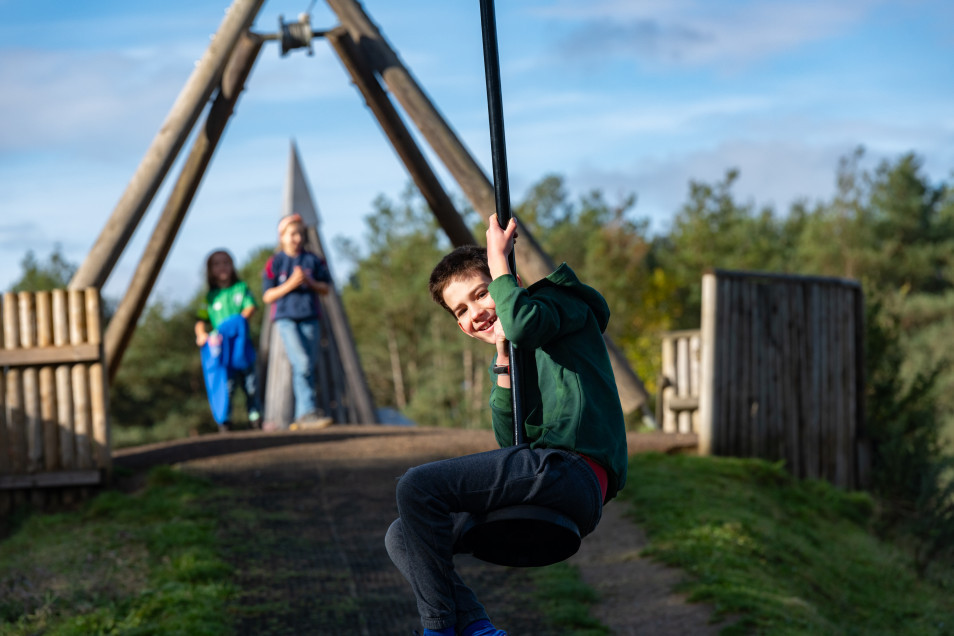
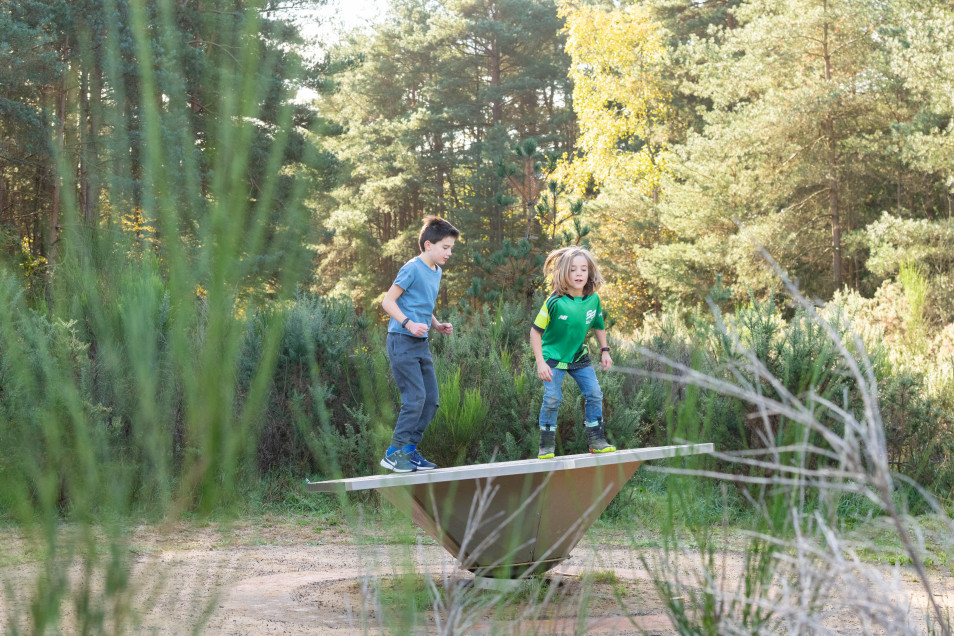
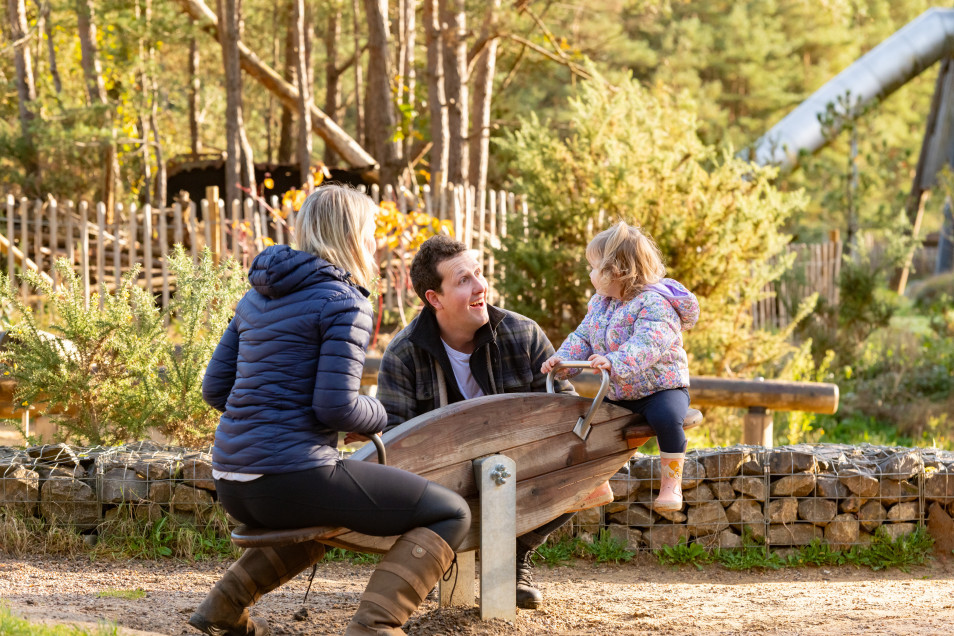
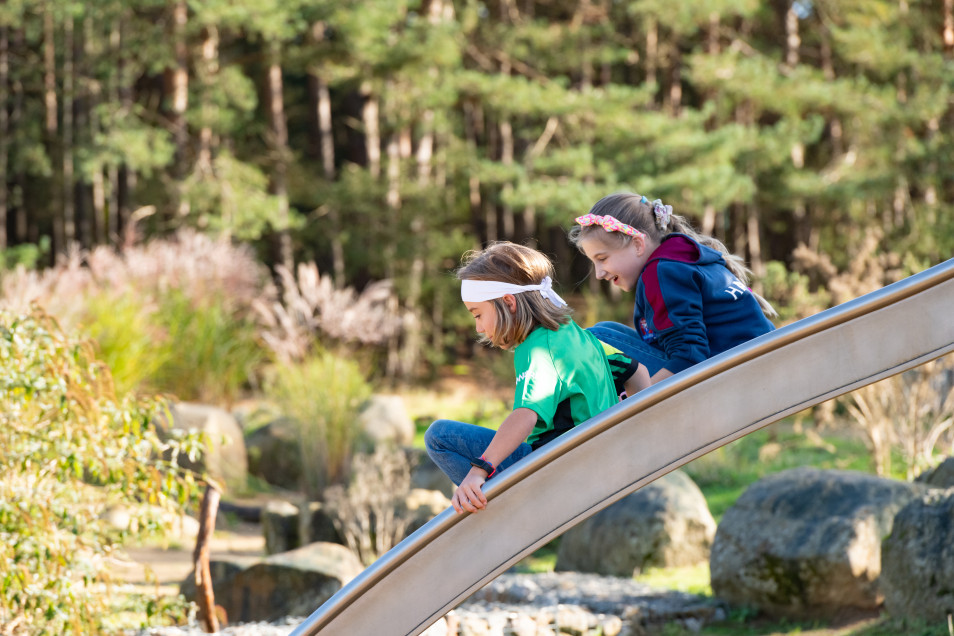
At Hogmoor Inclosure, the playground has become a beloved community asset that will serve families for decades. This longevity creates continuity – parents who played there as children can bring their own children to the same space. That intergenerational connection adds immeasurable value to a community.
The choice to use wooden playgrounds rather than synthetic alternatives reflects a commitment to environmental stewardship that resonates with landscape architects, local authorities, and communities around the globe.
EXPLORE THE BENFITS OF WOODEN PLAYGROUNDS