 Go to content


Play Expertise
How Do Natural Playgrounds Support Children's Development?
The developmental benefits of natural playground design extend far beyond simple entertainment. These thoughtfully crafted environments support growth across physical, cognitive, and emotional domains, creating foundations that serve children throughout their lives.
Physical Development: Challenge and Coordination
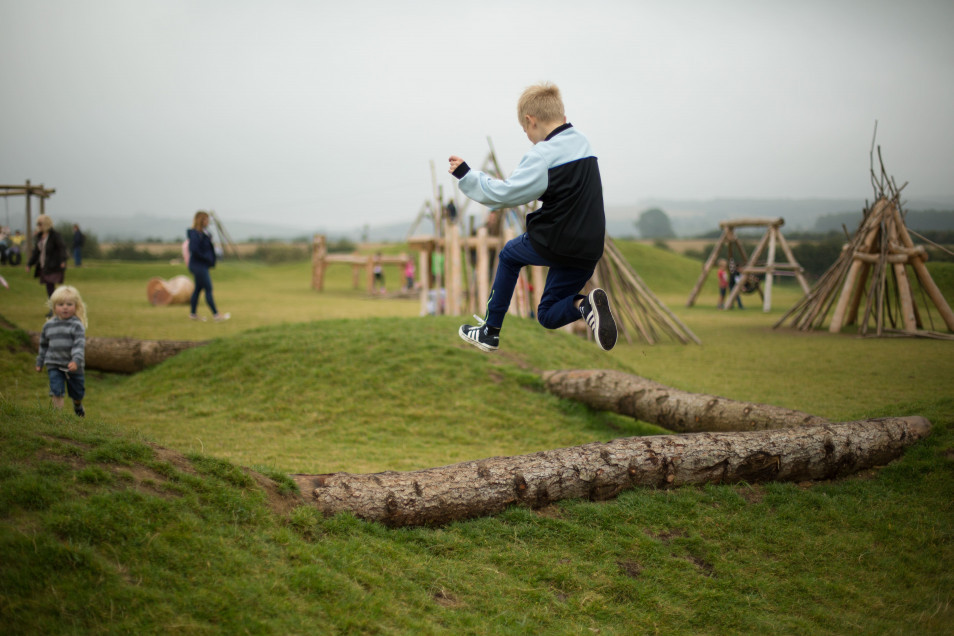
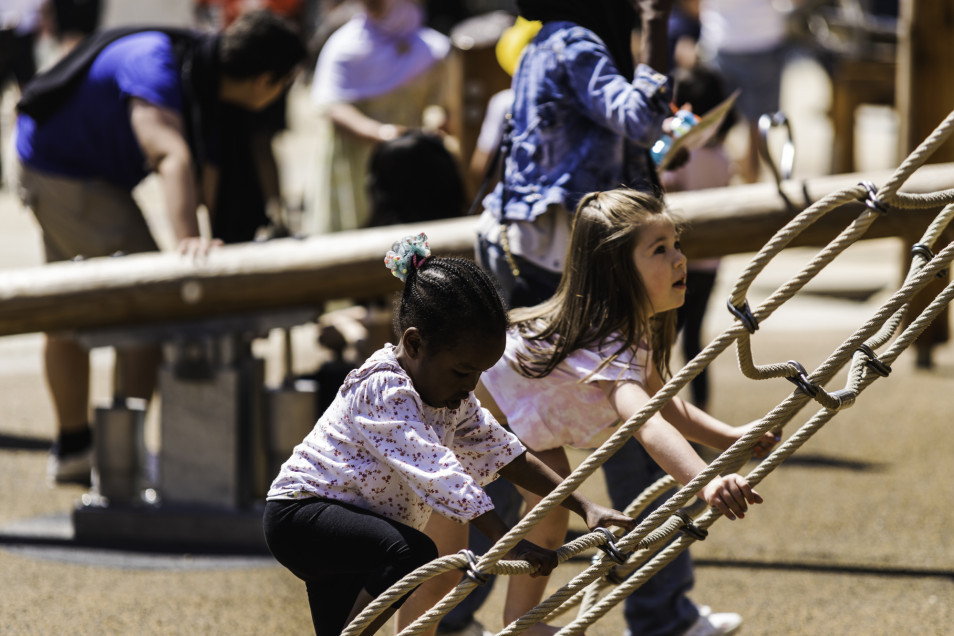
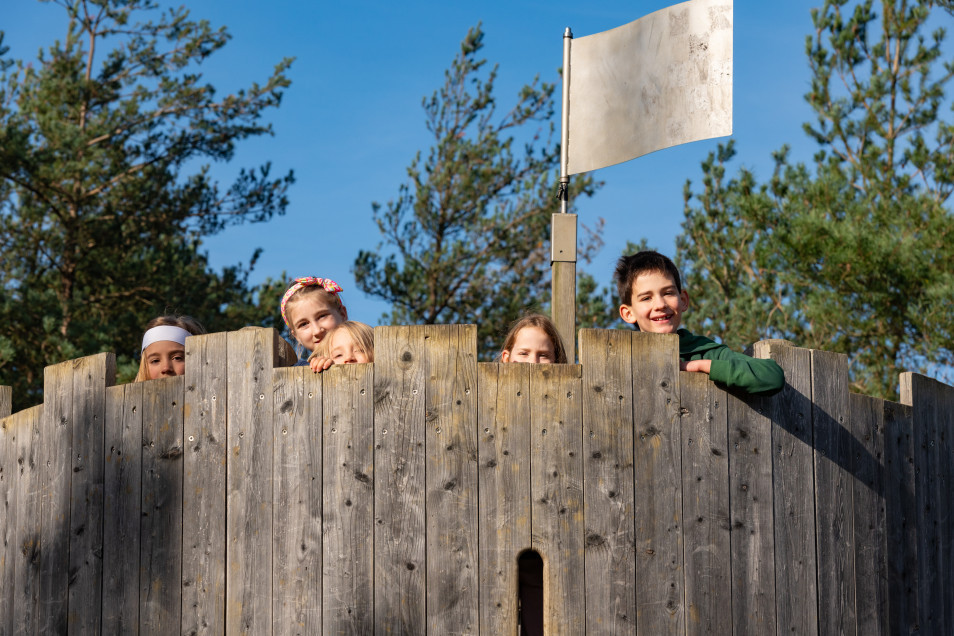
Wooden natural play equipment offers something conventional playgrounds rarely provide: genuine physical challenge with appropriate variability. When children navigate logs placed at varying heights, balance across stepping stones with irregular spacing, or climb boulders with unpredictable handholds, they're developing sophisticated motor skills and body awareness.
The uneven terrain inherent in well-designed nature-inspired playgrounds – gentle slopes, varied surface textures, occasional dips and rises – means children constantly adjust their movement patterns. This variability strengthens balance, coordination, and proprioception far more effectively than flat, predictable surfaces.
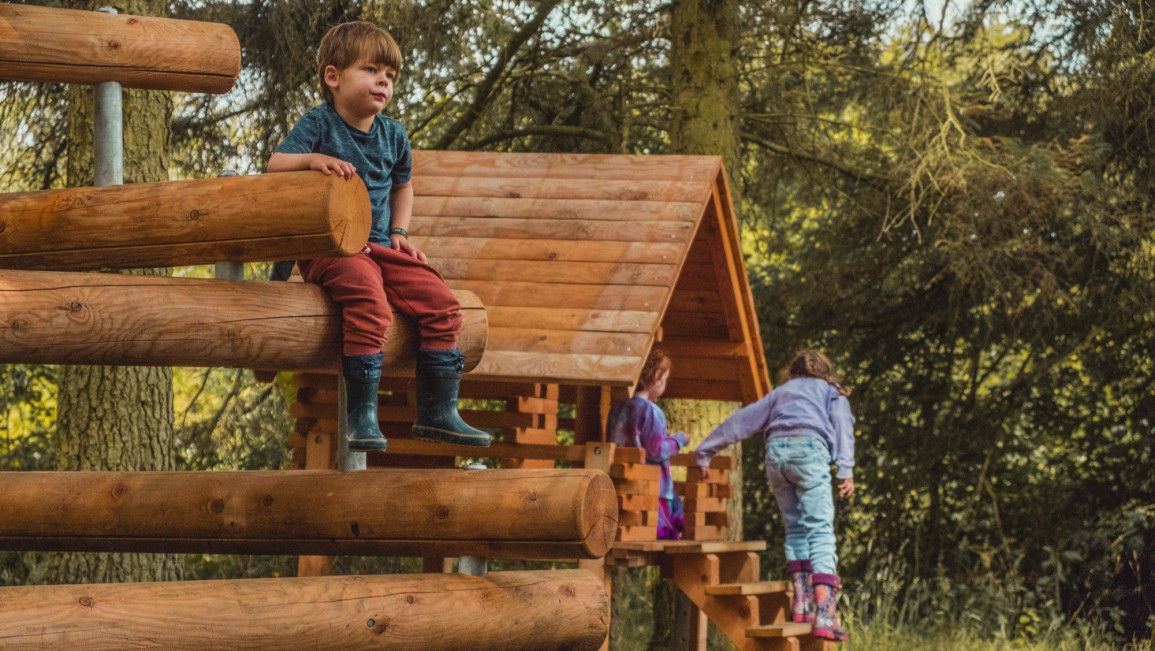
At Williams Den, the multi-level timber structures encourage children to assess risks, plan their movements, and build confidence in their physical capabilities. The equipment from Richter provides sturdy, reliable outdoor timber play equipment that can safely accommodate dynamic, adventurous play.
Cognitive Growth: Open-Ended Materials Spark Creativity
Perhaps the most profound benefit of natural playground design lies in cognitive development. When play equipment doesn't prescribe exactly how it should be used, children must think creatively, experiment, and problem-solve.
Sand and water play areas exemplify this beautifully. Children might spend an hour engineering a system to move water from one elevated container to another, learning about gravity, flow, and cause-and-effect. They transform sand into castles, roads, and imaginary landscapes. They collaborate to build dams, create channels, and solve the challenge of containing water in shifting sand.
Loose parts – sticks, pine cones, pebbles – become whatever children need them to be. A stick might serve as a wand, a tool for drawing in sand, or a bridge across a gap. This open-ended nature encourages experimentation and planning. There's no single "correct" way to play, which removes the fear of failure and encourages risk-taking in thinking.
The wooden playgrounds we design, like those at Heeley People's Park in Sheffield, England, incorporate multiple pathways, varied heights, and connection points that allow children to chart their own courses. Should I climb up here and slide down there? Can I find three different routes from this platform to the ground? This constant decision-making builds executive function skills.
Environmental Connection: Cultivating Stewardship
Nature-inspired playgrounds create something increasingly rare in modern childhood: regular, meaningful interaction with the living world. When children play among trees, observe seasonal changes in planted areas, and handle natural materials, they develop a relationship with nature that becomes part of their identity.
This connection isn't abstract. It's the child who notices that the leaves have changed colour since their last visit. It's the group who discovers beetles living under a log and becomes fascinated by minibeasts. It's the seasonal rituals – splashing in autumn puddles, tracking footprints in winter snow, watching spring flowers emerge.
These experiences cultivate curiosity about ecological relationships and environmental processes. They build outdoor confidence and comfort with the natural world that serves as a foundation for environmental stewardship throughout life. Children who grow up playing in nature-rich environments are more likely to care about protecting natural spaces as adults.
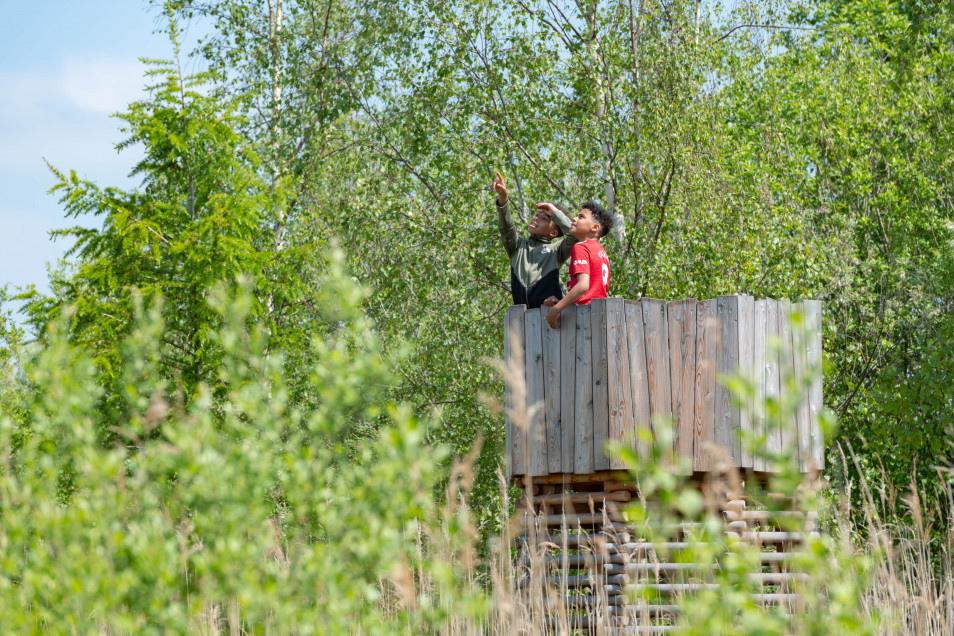
The playground at RSPB Old Moor demonstrates this principle beautifully, integrating play with opportunities for bird-watching and wetland observation. The message is clear: play and nature aren't separate – they're interwoven.
LEARN ABOUT SUSTAINABILITY IN PLAYGROUND DESIGN