 Go to content


Selected article
Play Expertise
Designing for Children with Hearing Impairments
Children who are deaf or hard of hearing need playgrounds that communicate visually and through vibration, creating spaces where verbal communication isn't required for full participation.
Design Principles
- Visual Communication: Maintain clear sight lines throughout. Use pictures and symbols. Strategic colour coding indicates different zones.
- Vibration and Tactile Feedback: Include equipment that creates vibration when used - drums that children can feel, platforms that vibrate when jumped on.
- Social Space Design: Face-to-face seating configurations support lip reading and sign language. Activity-based play facilitates cooperative play without requiring verbal communication.
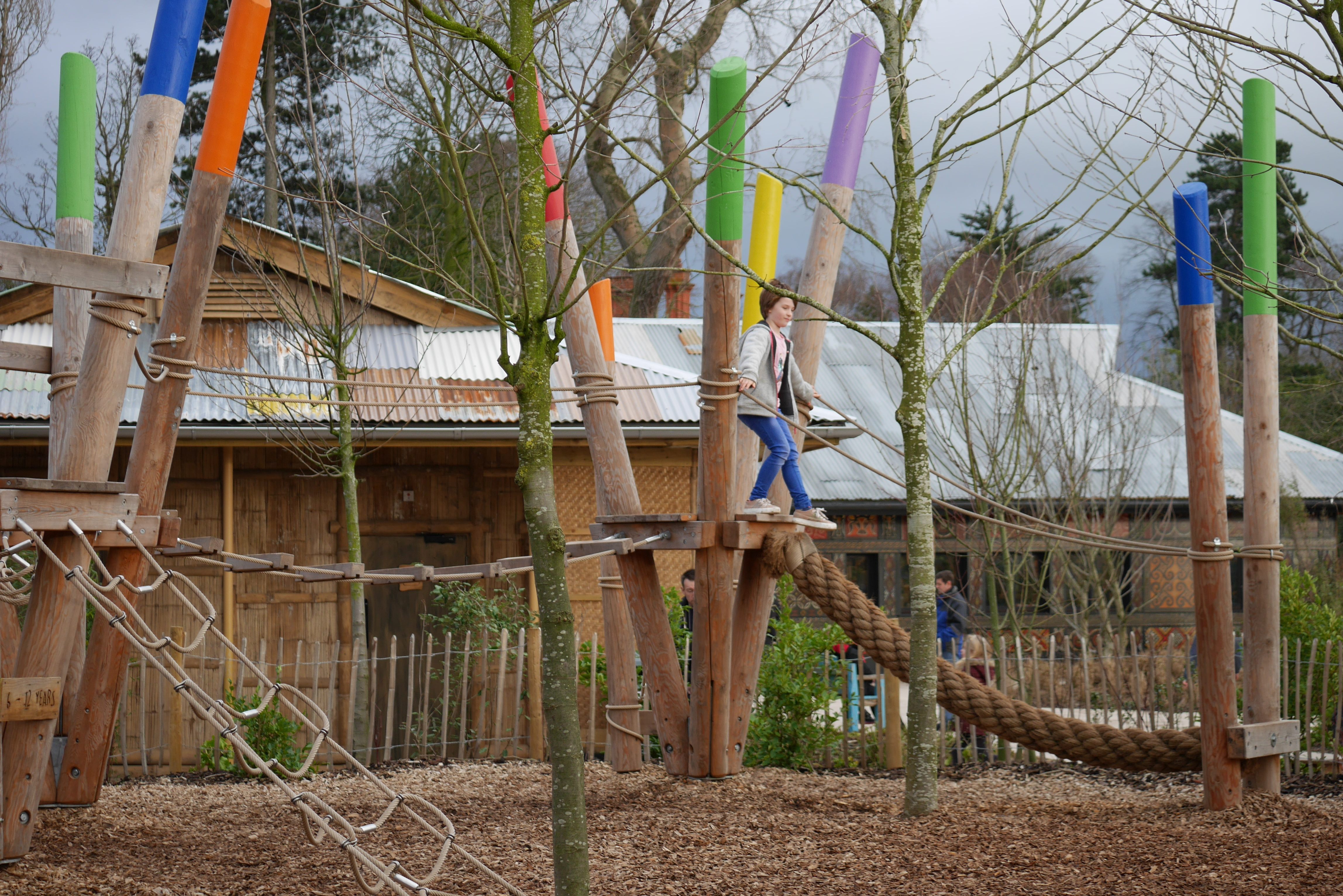
Case Study: Chester Zoo, UK
We created Chester Zoo's Islands play area with an open design featuring clear sight lines throughout the climbing structure, platforms, and equipment, allowing children with hearing impairments to maintain visual connection with friends and caregivers at all times. The thoughtfully positioned equipment creates visual pathways where children can see others playing on different elements, supporting both safety awareness and social connection without requiring verbal communication.
REQUEST DESIGN CONSULTATION