 Go to content


Play Expertise
Autism and Sensory Processing
Designing for Children with Autism and Sensory Processing Differences
With approximately 1 in 100 children diagnosed with autism in the UK, designing playgrounds that support neurodivergent children is essential to truly inclusive design.
Understanding Autism and Play
Many autistic children experience heightened sensitivity to sound, light, touch, or movement. Conversely, some are sensory seeking - they crave intense input through spinning, swinging, or climbing.
Design Principles
- Create Sensory Zones: Active zones for sensory seeking, calm zones for low-stimulation retreat, and moderate zones for transitions.
- Provide Enclosed Spaces: Small, enclosed areas provide security without isolation.
- Include Repetitive Activities: Swings, spinners that maintain steady rotation, and musical instruments allow rhythmic, repetitive actions that many autistic children find comforting.
- Support Parallel Play: Long sand tables and multiple similar pieces of equipment allow playing alongside others without forced interaction.
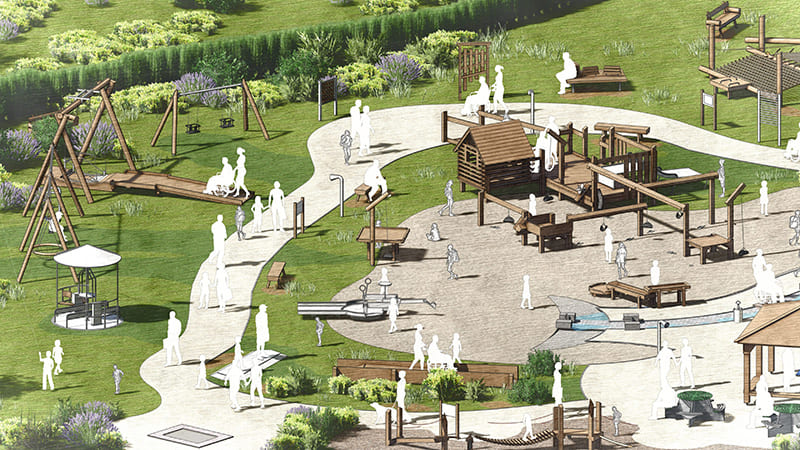
Case Study: The Thomas Playground Concept
The Thomas Playground concept, is Timberplay's visionary design co-created with AccessibleUK that reimagines inclusive play by asking "What if every child could feel included in the play experience, even if not every element was accessible to everyone?" This bold blueprint for belonging prioritises integrated design, sensory richness, flexible play, and universal value rather than mere compliance, setting a new benchmark for what inclusive playgrounds can and should be. The Thomas Playground includes sand play areas with accessible platforms. Sand is inherently calming, and the design supports parallel play beautifully.
The Role of Natural Materials
Timber playgrounds have inherent advantages: warm texture, acoustic properties that reduce echo, and visual calm.
LEARN MORE ABOUT THE THOMAS PLAYGROUND CONCEPT